






















Walk into any classroom, and you’ll hear the same anxieties about AI. Teachers warning about academic integrity, administrators debating new policies, endless conversations about ChatGPT and whether students are “really learning.” But amid all this talk about artificial intelligence, there is a more fundamental crisis that nobody wants to talk about: students can barely focus long enough to read a full page anymore.
Yes, ChatGPT can write your essay. Yes, students use it to avoid work. But here’s what’s actually happening: we are not using AI because we’re lazy. We are using it because our attention spans have deteriorated to the point where traditional work feels genuinely difficult in ways it didn’t for previous generations.
This isn’t about cheating. It’s about navigating a world that’s trained us to lose focus before we even start thinking.
The Real Threat Isn’t AI. It’s TikTok Brain.
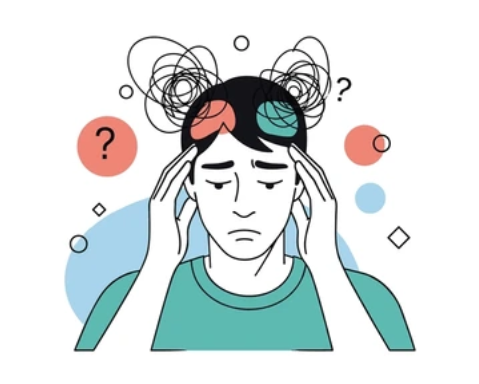
Schools are focused on AI as a threat to academic integrity, but there is a bigger issue in every classroom: students struggle to maintain focus for extended periods, skim instead of reading carefully, and find it difficult to engage with complex ideas that require sustained thought.
Brainrot culture isn’t just internet slang. It describes what happens when students grow up consuming content designed for maximum engagement and minimum attention investment. When ideas are compressed into seven-second videos and information is presented in constant, rapid-fire bursts, it affects how we’re able to think and learn.
We’ve been conditioned for instant gratification. When a task requires sustained focus and deep thinking, it feels considerably harder than it should. This isn’t because students lack the capability, but because the constant pull of algorithmically optimized content has made sustained attention increasingly difficult.
AI Is the Symptom, Not the Disease
Schools are restricting access to AI tools that could actually help address attention problems.
AI does not have to replace thinking. It can serve as a learning tool that breaks down complex ideas into more manageable pieces, acts as a patient tutor, or helps students organize their thoughts more effectively. These are exactly the channels of support that could help students rebuild focus and engagement with difficult material.
Instead of teaching students how to use these tools responsibly to support learning, schools are treating them as prohibited shortcuts. The implicit message is that students should simply focus better and work harder, without acknowledging that the attention challenges are real and require new strategies to address.
The Policies Don’t Match the Problem
Current school assignments often assume students can maintain focus and work independently for extended periods. But that assumption doesn’t match reality for many students who’ve grown up in an environment optimized for constant distraction.
Students turn to AI not just for convenience, but because it offers a way to manage workloads that feel overwhelming given their actual attention capacity. The question shouldn’t only be about preventing AI use. It should also be about why students feel they need these tools so urgently in the first place.
What We Actually Need
Schools need to recognize that something has fundamentally shifted in how this generation processes information. Policies should address the underlying crisis of deteriorating attention spans, not just the symptoms.
Students need to learn strategies for rebuilding focus and developing sustained attention. Assignments could be structured to account for current student capabilities while gradually building back cognitive stamina. And AI could potentially be part of the solution if it’s used thoughtfully as a learning support rather than banned outright.
Most importantly, the conversation needs to shift from academic integrity to cognitive development. The real challenge isn’t that AI might do students’ thinking—it’s that students are struggling with deep, sustained thinking in the first place.
Schools can keep implementing plagiarism detectors and restrictive policies. But until there’s acknowledgment that students are dealing with genuine attention challenges caused by years of exposure to engagement-optimized media, these policies miss the fundamental problem.
The real shortcut culture isn’t ChatGPT. It’s the constant scroll, the endless feed, the compression of information into content designed to be consumed in seconds and immediately forgotten.
AI policies address one symptom while ignoring the underlying condition. Students are looking for help navigating an educational system that hasn’t adapted to very real changes in how they’re able to learn.
Until schools are willing to have that conversation, restrictions on AI are just addressing the wrong problem.
Dora Cousineau • Dec 17, 2025 at 10:41 am
This is quite thought-provoking! I agree that this generation of students tends to lack the ability to concentrate on a task for a sustained period of time. I’d love to learn about teaching techniques that can help students relearn this skill.